
Printing one flying monkey coloring page can spark multiple kinds of learning when used creatively. Instead of printing many pages, a single image can become five different activities that blend art, observation, storytelling, research, crafting, and movement, all guided by curious questions and play.
Why does printing more pages not always yield better activities? Because the real value of a printable page lies in how it is used, not how many copies exist. When a teacher or parent frames the image with careful questions and varied tasks, the same picture can stretch across science, language, and physical play. A single flying monkey coloring page becomes a starting point for close looking, vocabulary building, and a sequence of imaginative challenges. The five experiences suggested here show how structure, discussion, and purposeful prompts reshape a simple line drawing into an evolving learning journey. With clear goals, a family or a classroom can switch gears quickly, moving from observation to storytelling, from research to creation, and finally to motion—all without printing a new image. This approach respects time, reduces waste, and keeps attention focused on process rather than pages. It also honors different paces and interests, offering options that work for both quiet and active learners. In short, the page sets the scene; the activities write the story around it.
Activity One — Color and Observe
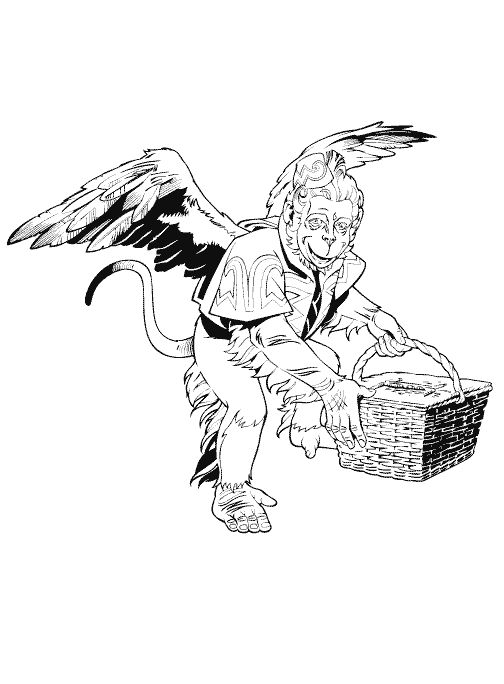
Activity One — Color and Observe begins with slowing down. Have children study the illustration before touching crayons: name every shape, notice where the wings and tail connect, and point out the color patterns already present. Ask questions like, What shapes do you see in the monkey’s face? How many clouds frame the scene, and what might the monkey be looking at? Encourage learners to describe textures and line weight: are the lines bold for emphasis or gentle for shading? Invite an informal tally of colors they notice in the page, then discuss what mood those choices create. This phase rewards careful description and mathematical thinking—counting elements, estimating proportions, and comparing sizes. When students articulate what stands out, they build a shared vocabulary that makes the next steps easier. After observing, allow a short warm-up color test on scrap paper to decide which colors might best represent movement in the air or sunlight on fur. The goal is to cultivate curiosity and language, not finish time with perfect color. The flying monkey coloring page thus becomes a scaffold for attentive looking.
To move from looking to coloring, offer prompts that invite choices and explanations. Why choose blue for the sky, or what color would show speed as the monkey glides? Encourage children to tell a tiny story about the moment they color, describing what the monkey feels or sees. This bridging step keeps the activity social and playful, while sharpening listening and speaking skills. A timer or a cozy corner can set comfortable pace, and adults can model descriptors, then invite peers to add their own adjectives. The aim is not to finish a picture quickly but to extend observation into color making and conversation.
Activity Two — Color and Tell
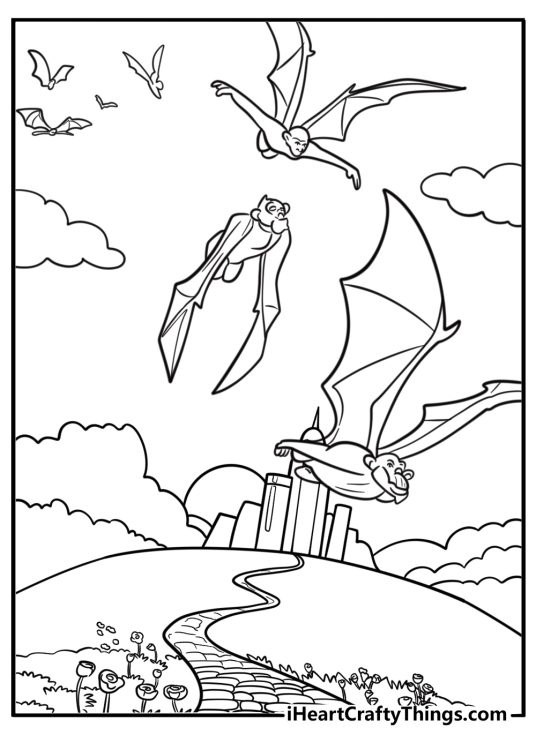
Activity Two — Color and Tell centers on turning color choices into dialogue. After the base colors are applied, invite children to describe the setting and craft a quick narrative with a beginning, middle, and end. Prompt questions: Where is the monkey flying to? What sounds does it hear? Who might be watching from below? Encourage kids to use descriptive words and dialogue as if the picture were a storyboard. For younger children, offer a simple sentence frame like, The monkey is flying because … For older learners, push a longer mini-story: a problem to solve during flight, such as delivering a message or finding a friend. If possible, pair students to alternate turns coloring and telling, so listening and speaking are practiced in a cooperative way. The activity reinforces memory, sequencing, and expressive language while keeping the image as a center rather than a finished product. The flying monkey coloring page serves as a shared canvas for collaborative storytelling.
Activity Three — Color and Research invites kids to connect the page to real-world ideas. After coloring, students can explore a few simple questions: What kind of habitat would suit a flying monkey? Are there real animals with wings that help them glide, and how do they move? What do their diets look like, and what sounds might they make in nature? Provide kid-friendly sources: kid books, short videos, or age-appropriate websites. Encourage note-taking in pictures, sketching, or a brief list of facts in their own words. Then invite them to compare their findings with the illustration: does the scene suggest day or night, forest or savanna, rain or sunshine? The aim is curiosity-driven research, not a perfect report. By linking observation to inquiry, the page becomes a springboard for science reading, vocabulary growth, and critical thinking. The flying monkey coloring page thus supports exploratory learning while respecting a child’s pace.
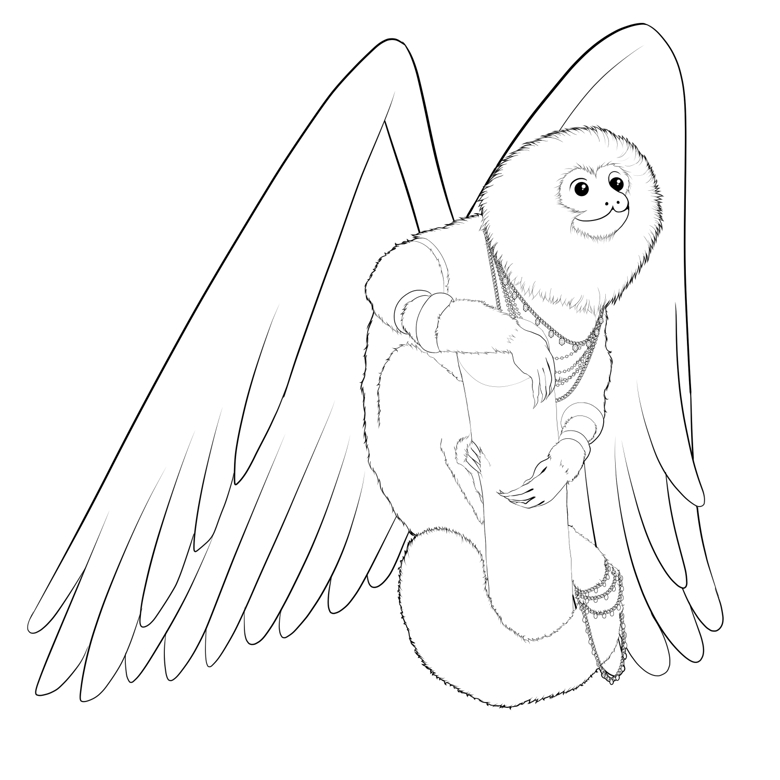
Activity Four — Color and Create and Activity Five — Color and Move can extend the page into hands-on expression and real-world action. Activity Four deepens the experience by adding drawing, writing, and crafts; after finishing the coloring, children can draw additional elements such as a background scene, a small caption, or a companion character. They might cut and paste paper shapes to build the monkey’s surroundings, write a one-minute story on the back of the page, or create a tiny paper banner that describes where the monkey is headed. This extension invites fine motor work and literacy in one combined task. Activity Five — Color and Move invites movement that echoes the flight and mood in the image. Kids can pretend to glide around the room, then pause to answer prompts about balance, speed, and direction. Short mindfulness breaths between moves help focus attention. When choosing extensions, consider the child’s age, interests, and learning goals; younger learners benefit from hands-on crafts, while older students may enjoy multi-step storytelling and scientific inquiry. Parents can use this at home by setting up a mini studio corner, rotating roles between color, tell, and research, and keeping activities short yet rich. Teachers can use this in class as rotating stations, pair work, or a short assessment task, aligning with science or literacy standards. In the end, the printable page is only the starting point; the real value emerges from the dialogue, exploration, and creativity that follow.