
If you've ever stared at two fractions and wondered how to match them, you're not alone. In this printable-friendly guide, we'll show you how to fill in the blank to make the two fractions equivalent, using simple steps and clear examples.
Here's the core idea: two fractions are equal if you scale both the numerator and the denominator by the same number. For example, 3/4 equals 9/12 because 3×3 = 9 and 4×3 = 12. When you see a blank, you're invited to find that common factor and fill in the missing part. A handy rule for quick checks is cross-multiplication: a/b = c/d if ad = bc. With a blank, think of it as a and b being the known pair and you solve for the missing numeral by matching the product on the other side. This turns into a simple multiplication problem rather than a mystery.
How it works
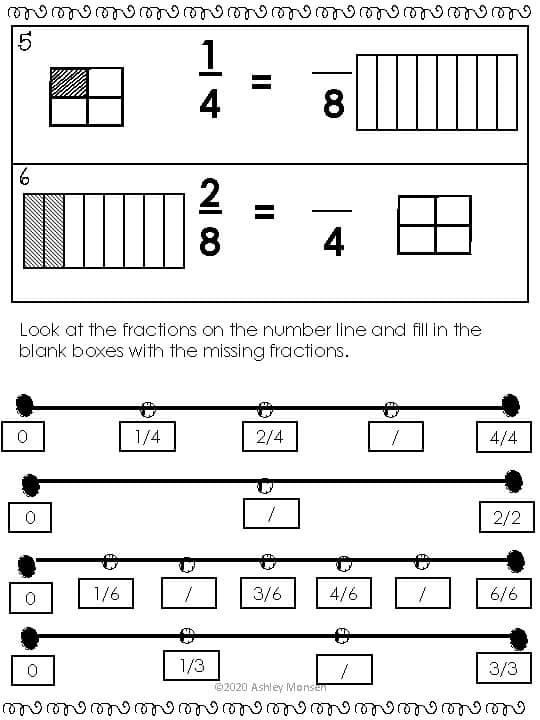
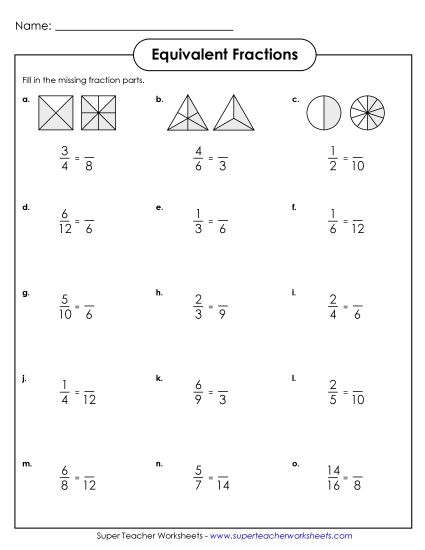
Try this to practice: fill in the blank in 2/5 = ?/15, the missing number is 6. Similarly, 3/4 = ?/16, the missing number is 12, since 3 times 4 equals 12 and 4 times 4 equals 16. Then, 2/3 = ?/9, the missing number is 6, because both parts are multiplied by 3. When you solve these, you'll start to see the pattern: multiply numerator and denominator by the same factor to create a matching pair. If you're unsure, test by cross-multiplying to confirm the equality.
Common pitfalls tend to trip students: changing only the numerator or only the denominator breaks the balance. Remember to apply the same factor to both parts. Check your result by cross-multiplication or by converting both fractions to decimals to compare. A quick checklist can help: choose a target denominator, multiply both parts, and then verify.
Practice ideas
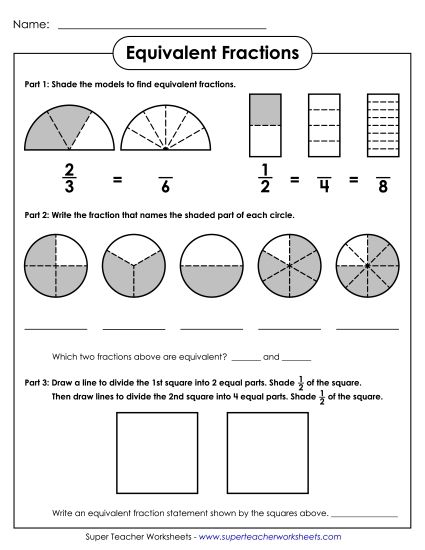
A simple printable approach is to design a tiny worksheet that hides one number per problem, inviting students to fill the blank. Start with a known pair, decide a common multiplier, fill the blank, and then check with cross-multiplication. You can create magnets, flashcards, or a tidy two-column scene in a notebook to repeat the exercise until it feels natural.
To bring this into everyday life, look for real examples: recipes that double a batch, measurements that scale, or sharing portions. These concrete contexts help learners see why keeping proportions equal matters. Pair the math tasks with a few quick colorings or doodles in the margins to keep it fun and engaging.
Whether you’re printing this for a student, yourself, or a classroom, a small set of fill-in-the-blank prompts can go a long way. Keep experimenting with different fractions and different target denominators. When you print your own sheet, you’ll have a friendly, portable tool to practice anytime.