
A workout chart printable helps learners and athletes organize goals, record workouts, and visualize progression. It turns practice into a guided sequence, making routines legible and scalable for a range of ages and fitness levels.
From a curriculum perspective, a workout chart printable provides a measurable, repeatable structure that learners can carry from gym to classroom-inspired practice. It clarifies learning goals such as consistency, gradual overload, and reflection, so students know what to document and why. By marking sets, reps, duration, and perceived effort, the chart becomes a data-informed tool that supports feedback cycles with coaches or instructors. The printable format invites customization for different units—endurance, strength, mobility, or skill work—without requiring specialized software. Instructors can model how to set attainable short- and long-term milestones, helping learners build confidence as they see steady improvement over weeks. The result is an actionable resource that bridges planning and execution.
Learning goals
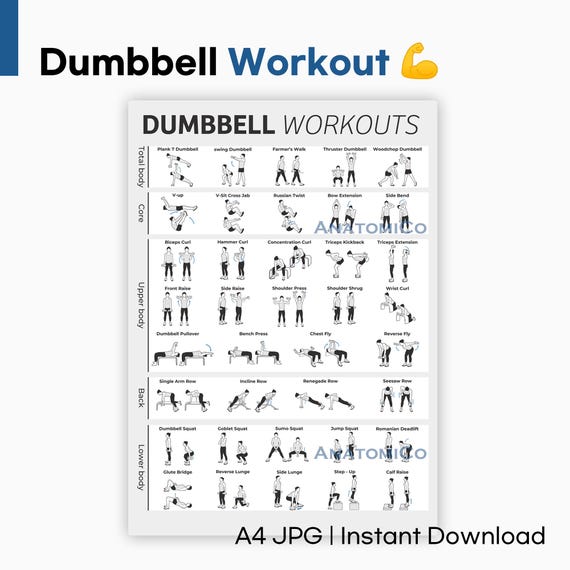
This printable acts as a bridge between planning and performance. For physical education and wellness programs, it demonstrates progressions across competencies such as movement quality, consistency, and self-monitoring. Uses include weekly planning sheets, habit trackers, or quick warm-up-aid charts that students can annotate during practice. The design should encourage legible entries, simple codes for exercise types, and space for notes on form or safety reminders. When teachers or trainers model how to interpret the data—spotting trends in fatigue or peak performance—the chart becomes a learning artifact rather than a mere checklist. A well-designed printable also supports differentiation, allowing learners to adjust volume, intensity, or rest based on readiness. This thoughtful integration ensures the resource supports instruction rather than merely decorating the wall.
Practical uses include adopting a four-week progression where each week builds on the previous one, plus a scoring area that captures effort and recovery. When students fill in durations, weights, or distances, they develop numeracy while learning interpretation skills. The printable can be color-coded to indicate training zones, making it easier to see when someone stays in a safe, sustainable range. Integrators might pair the chart with a brief reflection prompt, such as what felt challenging this week, to cultivate metacognition. For families, the same template serves as a friendly way to support healthy routines at home. The key is consistency: a predictable format helps learners understand expectations and feel ownership over their fitness journey.
Design considerations
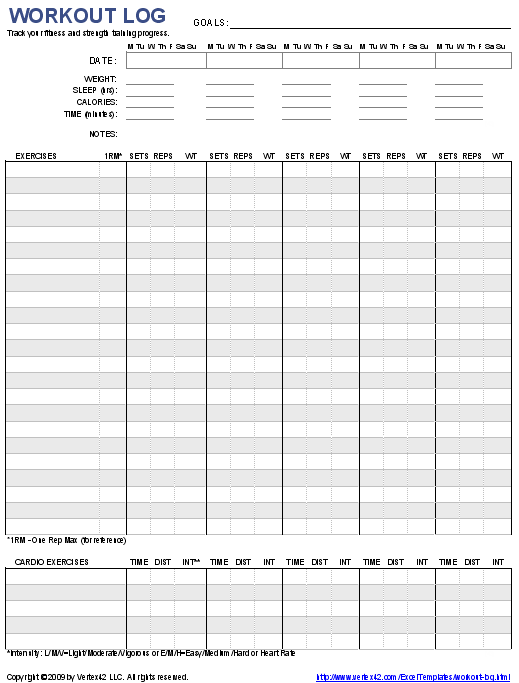
When selecting a layout, prioritize clarity over complexity. Use a clean grid with labeled columns for date, exercise, sets, reps, and notes, and reserve space for safety reminders. Accessibility matters: choose large, legible fonts, high-contrast colors, and ample margins so learners can write comfortably. Encourage modular use—for example, a one-page weekly chart or a two-page monthly spread—so instructors can tailor to the unit length. Consider pairing the chart with a short instructional video or a rubric that explains how to interpret changes in performance. Finally, ensure the printable remains versatile by allowing adjustments to the exercise list as needs evolve, so the resource stays relevant across cycles.
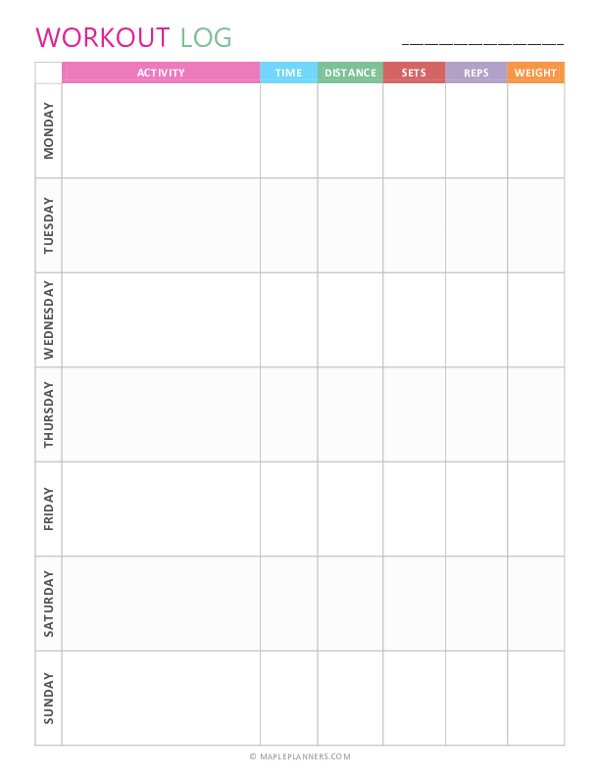
To maximize impact, pair the printable with a short instructional routine. Students can pre-plan workouts before class, perform them, then record outcomes and reflect in a follow-up discussion. The chart supports formative assessment by showing growth over time and highlighting areas that require additional practice. By collecting routine data, instructors can adapt lesson sequences to reinforce durable habits and safe technique. Providing a consistent documentation method also helps learners compare performance across different activities, such as cardio, strength, and mobility, while preserving a cohesive progress narrative. The resource thereby becomes a living document that grows with each unit, not a single assignment.
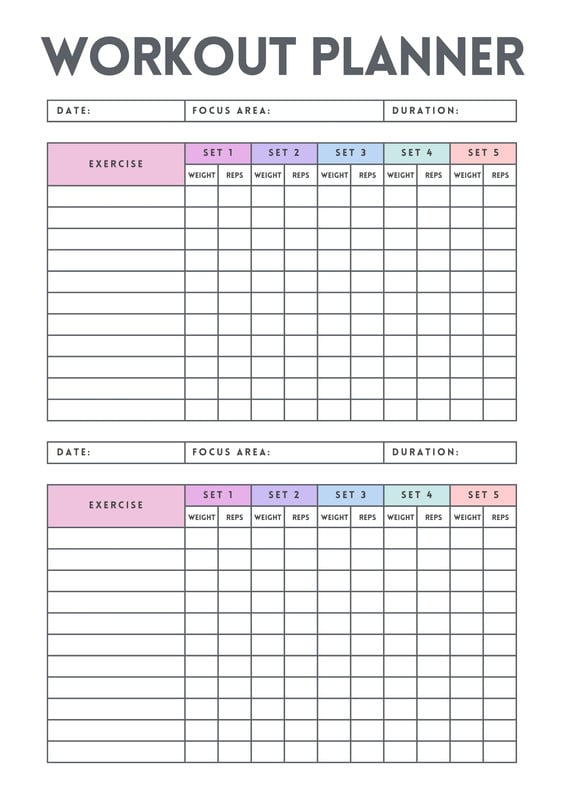
Adopting a workout chart printable in a programmatic way supports a standards-aligned approach to wellness education and personal fitness. It empowers learners to set realistic targets, monitor effort, and adjust plans responsibly, all within a reproducible format that teachers and students alike appreciate. When used consistently, the chart becomes a familiar artifact that reduces cognitive load during busy sessions and frees mental space for technique and strategy. Encourage portable use, so students can continue logging outside formal sessions. Finally, designating a brief feedback ritual—weekly check-ins or peer reviews—helps sustain motivation and accountability. In this way, a simple printable template becomes a catalyst for structured practice, reflective learning, and enduring healthy habits.