
When I walk into a classroom ready to explore early math, I look for objects that invite questions. number blocks printables often become that spark—colorful, tactile, and easy to reuse. They invite students to count, compare, and build with purpose.
A curious, practical approach
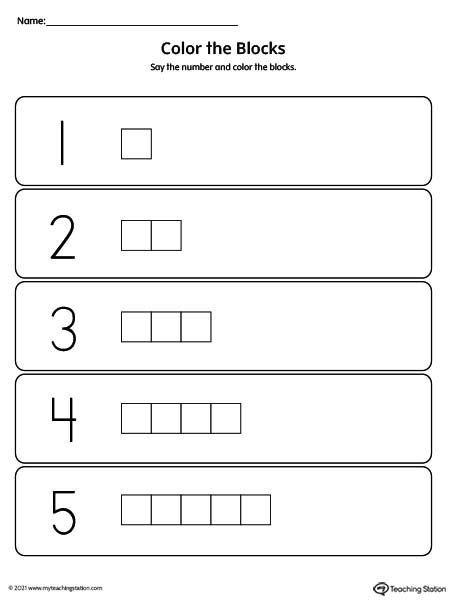
On the table, I arrange counting mats and number bonds using printed blocks. Students start by lining up blocks to match a shown total, then try to build the same total with different combinations. I ask, how many ways can we reach five? What happens when we add one more block? By watching them manipulate the pieces, I notice who understands order and who benefits from verbal rehearsal. For younger learners, I start with two–three block piles and gradually introduce larger sets. For mixed-ability groups, I pair a beginner with a partner who can model counting aloud, then switch roles. The printable format makes it easy to repeat a task with minimal setup: a quick print, a dry-erase surface, and a few minutes of guided exploration before moving to a new challenge.
Getting started with sets
To help learners connect blocks with place value, I use color-coded printables that group units, tens, and hundreds. Students build two-digit numbers by combining blocks that represent tens in one pile and ones in another, then verify the sum with a quick counting check. When a partner mistakes a carry or regrouping, we slow down and recount aloud, labeling each step as we go. I also introduce printable card games: flip a card, assemble a number with another player, and explain your strategy. For students who need more support, I provide a simple number line and a set of base-10 blocks that sit next to the printable sheets. For faster learners, I add challenge tasks like comparing magnitudes or composing numbers using three blocks.
Beyond drilling, these printables become a turning point for mathematical discussion. I encourage math talk: 'Why does this block represent ten? How did you decide to regroup?' The act of cutting, sorting, and reassembling blocks is a concrete way to externalize thinking. Laminating the sheets and providing dry-erase markers lets students reuse the activities many days in a row. I keep a small portfolio in the corner where students place completed sheets, reflecting on what they learned and where their strategy changed. When more time is available, I extend the activity by introducing measurement with blocks—using a ruler to compare lengths or counting blocks per inch. Finally, I rotate the printable sets weekly so that students see new arrangements and stay curious about numbers rather than routines.
Organization and classroom flow matter; I design a quick start routine: a 5-minute warm-up with a single sheet, then a 10-minute partner task, and a 5-minute closing discussion. I place the printables in a dedicated center with a clear label, a small tray of dry-erase markers, and a laminated number line. Students take responsibility for returning pieces, and I model a few sentence stems to guide talk: 'I notice…', 'I wonder if…', 'What is the rule behind…?' This approach helps learners build independence while still benefiting from structured guidance. Keeping color-coding consistent across sets helps students transfer ideas from one activity to another. The goal is not to complete every page but to practice exact concepts with concrete materials, then explain them in their own words.
Looking ahead, I encourage students to design their own printable block puzzles, sketch out a small solution path, and share it with the class. This not only reinforces number sense but also fosters communication and collaboration. When learners explain their choices aloud, they become more confident mathematicians who can transfer insights to standard worksheets and real-world problems. As teachers, our job is to supply accessible tools and ask probing questions, then step back and watch ideas take shape. number blocks printables offer a flexible, repeatable way to cultivate curiosity about numbers and patterns, one thoughtful interaction at a time.