
Field notes from a folding table—printable wedding program templates simplify ceremony prep without losing style. This opening guide shares practical layout ideas, sensible timing, and simple steps to tailor programs to your venue, guests, and love story.
Practical Foundations
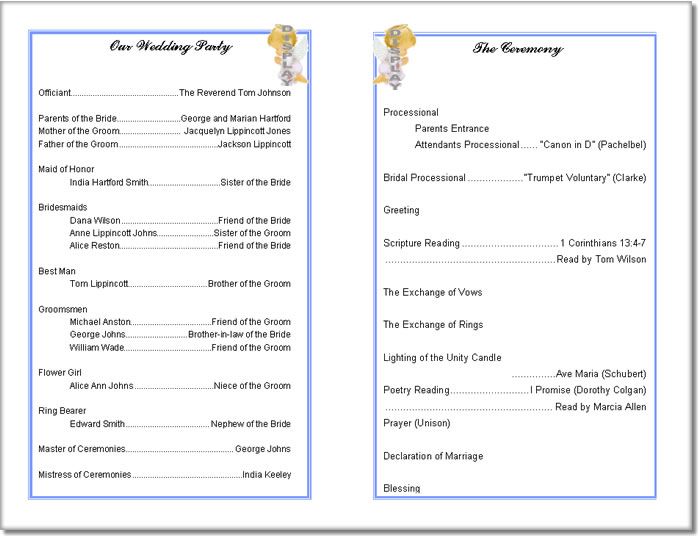
As a field guide author, I catalog the essentials of printable wedding program templates: purpose, form, and function. Start with content—order of service, participant names, and readings. Then note constraints: margins, font size, line length, and the balance between ornament and readability. Templates shine when they adapt to ceremony length and guest accessibility. Folded programs offer a graceful three-panel layout; single-page templates work for shorter ceremonies. The key is to map the flow before you print: who speaks, when, and for how long. If your ceremony includes multilingual guests, leave room for translations or live updates. Using templates helps keep content aligned with your theme and gives you a baseline to adjust vows, readings, and acknowledgments. Finally, test print a sample on your stock to verify contrast and alignment.
Layout decisions
Then, tackle layout with a practical eye. Decide on a panel arrangement that matches your ceremony pace, with the order of service, participant names, and any ceremony notes clear at a glance. Choose fonts with readability in mind—serif for printed elegance, sans-serif for modern clarity—and keep a generous margin to avoid crowding. Color can echo your palette, but high contrast remains essential for aging eyes in dim lighting. Consider adding micro-helps like a pronunciation guide for names or a tiny map to the church layout. If your wedding has readings or musical performances, a compact schedule block helps ushers and readers stay on track. By sketching a rough mockup first, you can adjust content without touching the final print run.
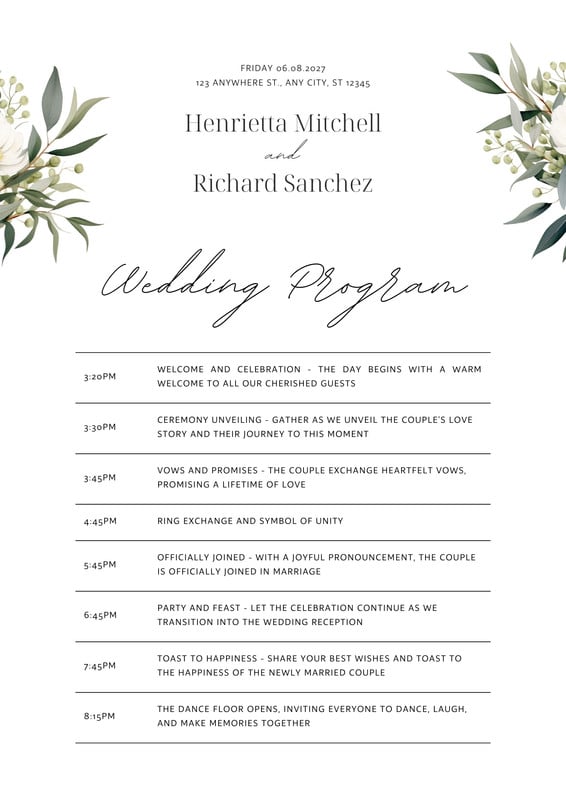
With content ready, the next field task is production. Decide whether your printable wedding program templates will be printed at home or through a professional printer. For DIY, choose a sturdy stock (not thin printer paper) and set a safe margin to avoid loss in trimming. If you anticipate a short run, a simple single-page format can save time while still looking polished. For folded programs, verify the fold line lines up with your paper size and trim lines to avoid misalignment. Pay attention to color settings—sRGB is a safe standard for home printers—and consider subtle, archival inks for longevity. Finally, assemble a small proof run with sticky tabs and a test batch of envelopes so the presentation feels deliberate, not hurried.
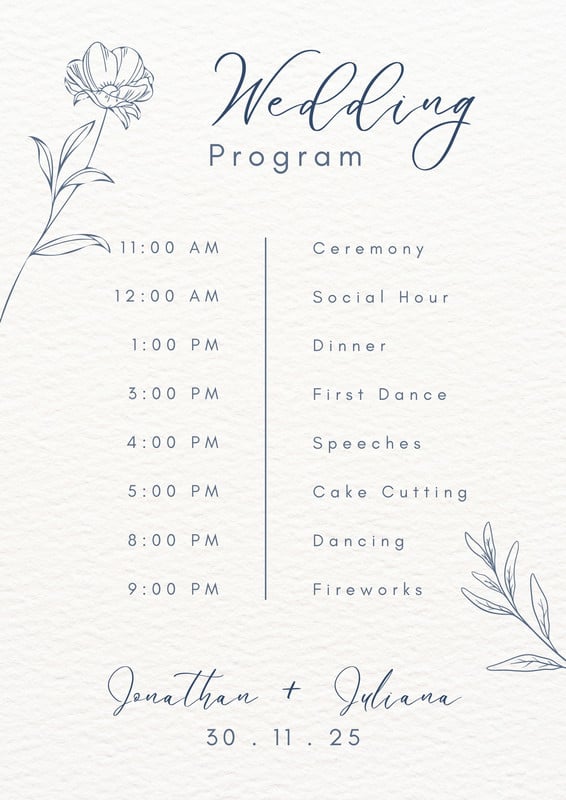
Beyond aesthetics, accessibility matters. Choose high-contrast text, legible font sizes, and clear section headers. Aim for a calm, uncluttered layout that guests can skim in seconds. Space items logically: a section for processional order, then participants, then readings. If you expect children or elderly guests, consider a larger print size or a simple one-page version, and provide a second, larger print version if possible. Store extra copies in a protective sleeve to prevent wrinkles, and keep the master file organized so you can reprint if a last-minute tweak arrives. A well-considered printable template reduces surprises on the day and lets you focus on the ceremony.
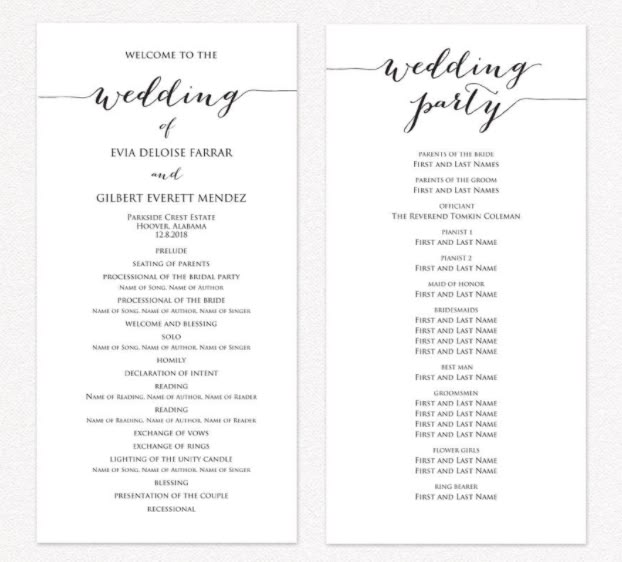
Takeaway: start early, test prints, and tailor every line. A strong approach with printable wedding program templates means content first, then form, then print details. Build a template that can flex with your guest list, venue, and timing, and keep all copy centralized so changes ripple through consistently. Use your design elements across programs, signage, and save-the-dates to create a cohesive experience. On the day, a few extra copies and a tidy stack near the guest book prevent delays. With patience and a few quiet adjustments, your programs become functional keepsakes—informative, beautiful, and meaningful long after the aisle has closed.