
As a Montessori teacher, I value independence, order, and hands-on learning. This printable set invites children to explore words with initial v through simple, meaningful activities. By tracing letters, matching pictures, and sorting by sound, students build confident practice that respects their pace and supports focused, concrete thinking.
Children begin by noticing that many words with initial v look different but share a voice sound. A tracing card helps form the letter V with careful, deliberate movements, which supports the hand as the tool of thinking. Then a labeling game lets them place picture tags next to the correct word, strengthening one-to-one correspondence and visual discrimination. Finally, a small sorting activity invites students to group items by beginning sound, turning listening into concrete action. These steps honor the child's pace, offer meaningful feedback, and keep the learning day calm and purposeful.
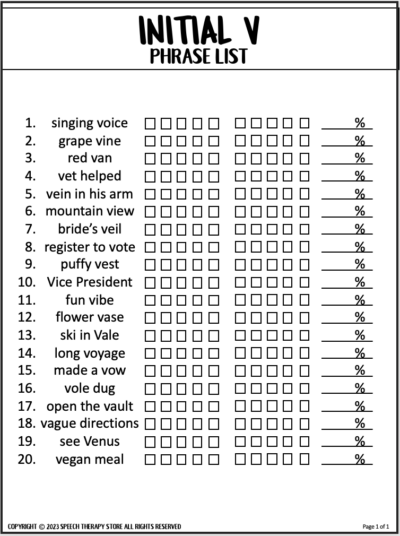
Words with initial v
Printable design notes help you organize this learning in a small, independent way. Start with a vertical shelf card that shows five target words, a matching picture, and the letter V in a bold, easy-to-see form. Children can work in color-coded trays: red for tracing, blue for matching, green for sorting. A brief checklist at the bottom of each page invites them to self-assess, with calm reminders to tidy materials before moving to the next activity. By keeping everything orderly and clearly labeled, you invite sustained concentration and a sense of accomplishment when a task is completed.
Extend the activity with practical penmanship and gentle reading practice. Students can color-code the V words and their pictures, then cut and paste them into a small vocabulary book. A sentence strip activity invites them to write simple, meaningful phrases such as 'the violin' or 'a volcano' using the correct initial V, guided by line placement and spacing. Real-life connections matter here: point to a nearby object that starts with V and invite a verbal labeling when the child is ready. The emphasis remains on meaningful work, not speed, so the child can observe, think, and choose the next task confidently.
Independent work
At circle and during work cycles, adapt the printable resources to meet each learner where they are. Offer simpler or more complex word lists, depending on readiness, and provide a tangible reference chart that stays on the shelf. Invite the child to lead, using the needs of the moment as a guide: if concentration is deep, pause and observe; if curiosity leads, extend with a labeling challenge or a new picture card. This approach honors the Montessori principles: the materials teach themselves with careful, intentional presentation, and the child progresses through active, hands-on work toward independence.
Consider how to integrate these pages into daily routines. Print on sturdy card stock, trim to simple margins, and laminate key cards for durability in a busy classroom or home learning space. Use a small tray as a work station where the child can select a tracing card, a picture card, or a sorting mat and then return the pieces with care. The predictable layout and tactile materials help reinforce sequencing and order, so the child develops a concrete sense of time and responsibility while building vocabulary with words that begin with v.
With patience and a calm environment, these printable resources become a reliable part of a child-led literacy journey. The goal is not to rush, but to offer meaningful choices that honor the child's natural curiosity. When a child completes a project, celebrate quietly, reset the work area, and invite reflection on what was learned. In time, the child will carry forward the habit of careful observation, precise work, and the joy of discovering new words that begin with v.