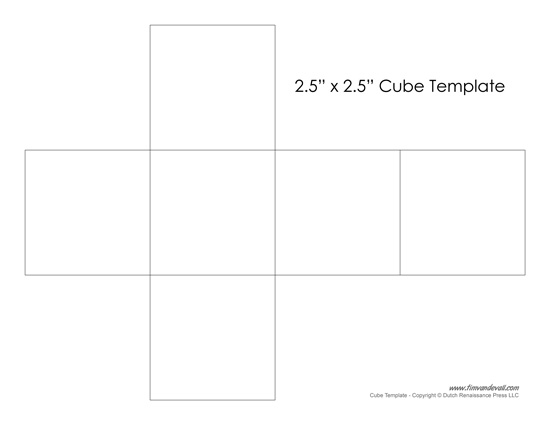
cube template printable offers a practical starting point for hands-on geometry, letting students assemble a cube from a ready-made net. This resource simplifies classroom setup and supports families at home with clear visuals and durable templates.
Educational publishers design cube templates printable to bridge theory and practice. With a single net, learners discover how flat shapes become a cube, reinforcing spatial reasoning. The template supports differentiated work: beginners can assemble the cube step by step, while advanced students explore surface area and volume by labeling faces and measuring edges. Using a printable model also builds fine motor skills through precise cuts and folds, turning abstract ideas into tangible understanding.
cube template printable
Beyond the basic model, these templates invite creativity and cross-curricular connections. Print on sturdy paper or cardstock, punch the folds, and seal with adhesive to create a durable cube for reuse. Teachers can pair the cube with math tasks, such as naming faces, predicting how many faces meet at each vertex, or comparing cubes of different sizes. In science, a labeled cube can serve as a simple unit for counting, sorting, and representing data.
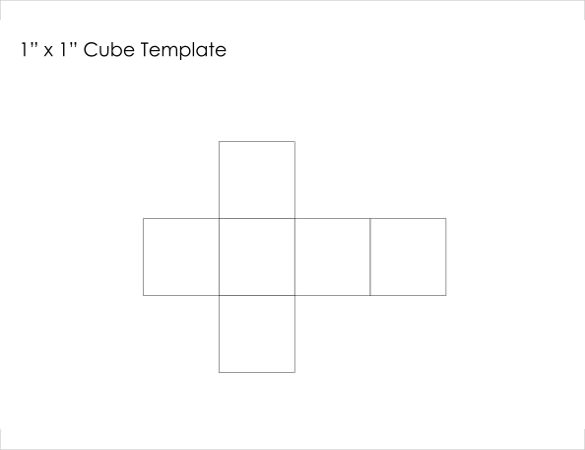
Adaptation is a key strength of a good cube template printable resource. For younger learners, provide color-coded nets and pre-creased lines to guide folding. For older students, include blank faces where students can write a measurement or a property, turning the cube into a data container or a model for probability. You can also laminate the sheets to create a long-lasting manipulatives set or mount them on a classroom wall as a tactile reference.
Printing and assembly
Printer choices and paper quality influence durability. Select bright, fade-friendly ink on smooth white cardstock. Print at actual size and check that the grid aligns with the fold lines; use a ruler to verify. Score along lines with a blunt tool for clean folds, then fold and glue or tape the tabs. If you need a bulk resource, consider creating a small batch of nets in a single print run and separating them after cutting.
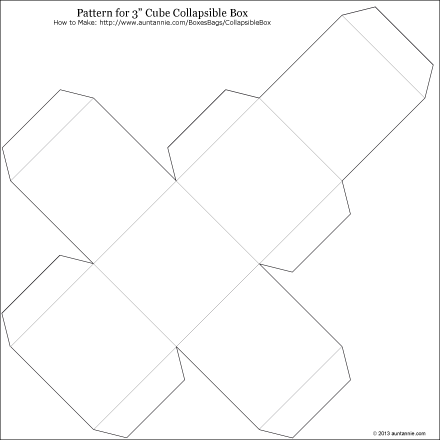
Implementation ideas you can use right away include station-based tasks: net cutting, cube assembly, and a quick validation exercise where students measure edges and count faces to confirm a perfect cube. Have students compare cubes of different sizes to discuss scaling, or use multiple colored cubes to indicate surfaces or vertices in a geometry diagram. A printable cube also supports interactive centers, where learners simulate dice throws, track outcomes, and compare experimental results with theoretical possibilities.
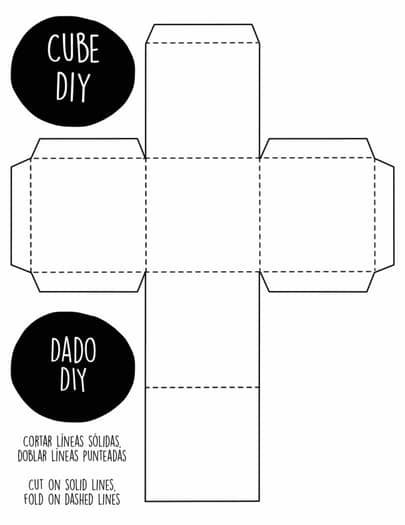
With thoughtful setup, a cube template printable becomes a dependable, repeatable resource that scales from preschool through high school. It emphasizes clarity, precision, and hands-on inquiry, helping students build confidence as they translate two-dimensional nets into three-dimensional objects. Keep a small library of templates in your curriculum toolkit and invite learners to contribute their own variations, ensuring the material stays fresh and useful.