
A printable food journal provides a clear, reusable template for recording meals, snacks, and hydration. By consolidating daily choices in one place, it helps identify patterns, manage portions, and support dietary goals without relying on digital apps.
Readers often wonder how a printable food journal differs from a casual notebook. The purpose is to create a consistent record that supports clarity and long-term awareness of eating patterns. By standardizing fields such as date, meal type, ingredients, portions, and notes, the journal becomes a quick reference for identifying triggers, preferences, and gaps in nutrition. A reference-style format keeps data legible and comparable over weeks, which helps when discussing meals with a clinician or nutritionist. It also reduces the cognitive load of remembering every detail, because the journal becomes the reliable memory aid.
Different users favor different layouts depending on goals and schedules. A simple daily log can fit in a pocket, while a weekly overview supports meal planning and shopping lists. Some templates include sections for water intake, sleep quality, or mood to explore connections between eating and daily rhythms. Color-coding or icons can simplify scanning, but a neutral design minimizes distraction when printed on standard paper. For families, multi-user spaces or family-friendly prompts encourage participation without confusion. The key is balance: enough structure to guide entries, enough flexibility to permit personal notes.
Formats and templates
Available printable formats include daily pages, weekly spreads, and refillable planners with sections for breakfast, lunch, dinner, snacks, and beverages. Some designs feature a grocery list tied to the week’s meals, which can streamline shopping. Others emphasize a clean, minimal layout to reduce ink usage and improve readability. When choosing a format, consider how often you plan to print, how much space you need for notes, and whether you prefer lines, grids, or blank areas for custom entries.
Usage tips
To integrate a printable food journal into routines, place a printed page somewhere visible and set a daily reminder to complete entries. Start with a small, focused routine: record meals and water, then add a quick note about how you felt after each meal. Use a pencil in case you revise portions or ingredients. If you rotate templates, label weeks with dates and keep the same core fields for consistency. Store completed pages in a binder or folder to build a personal nutrition history that you can review quarterly.
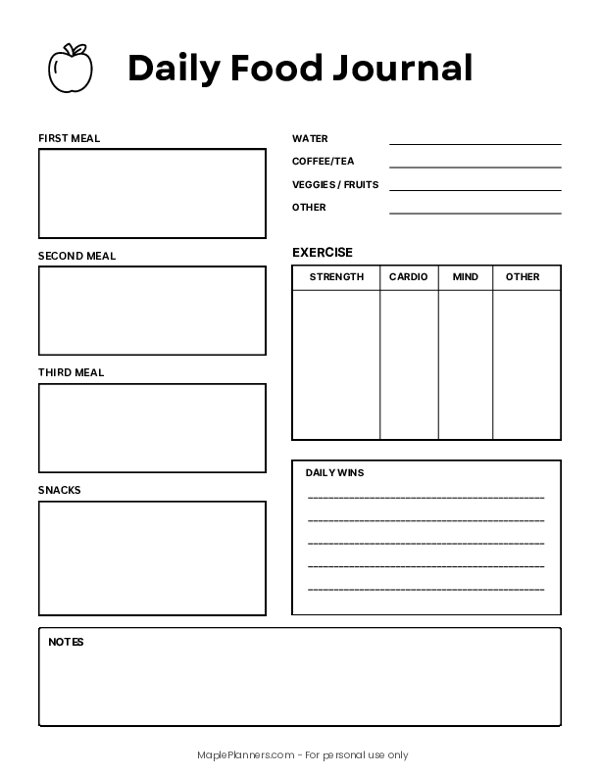
Practical considerations include choosing sturdy printer paper, selecting a legible font size, and keeping a spare batch of pages on hand. Printing in batches reduces trips to the store and ensures availability when you travel. For households with shared meals, a public-facing page can be useful, while private entries can stay in a personal section or binder. A well-designed printable food journal respects privacy but remains easy to use, enabling honest records without friction.
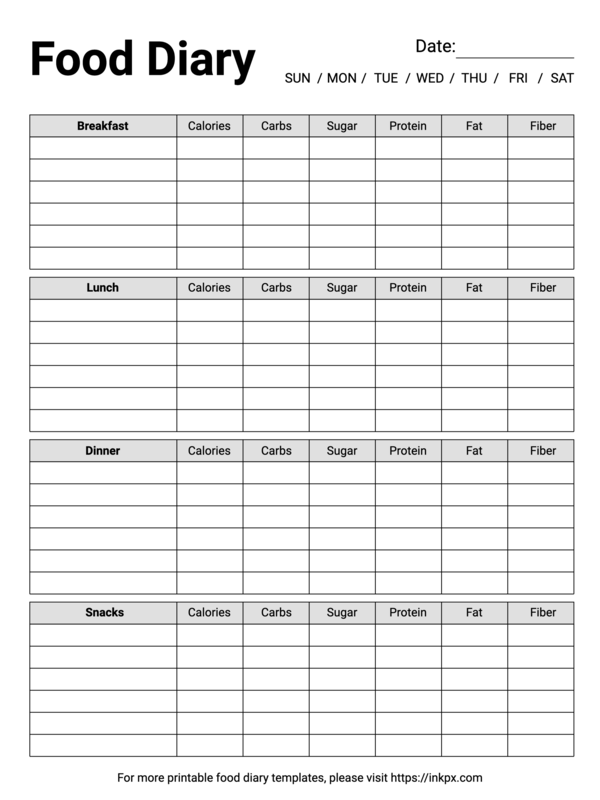
Analytical use of journal data can inform grocery planning, plate composition, and portion awareness. By aggregating entries over a week or month, you can spot trends in protein intake, fiber consumption, or late-night snacks. The printable format helps keep these insights tangible rather than buried in a digital app. Treat the journal as a living document, updating sections as needs evolve, and consider pairing it with a simple checklist of goals to measure progress over time.
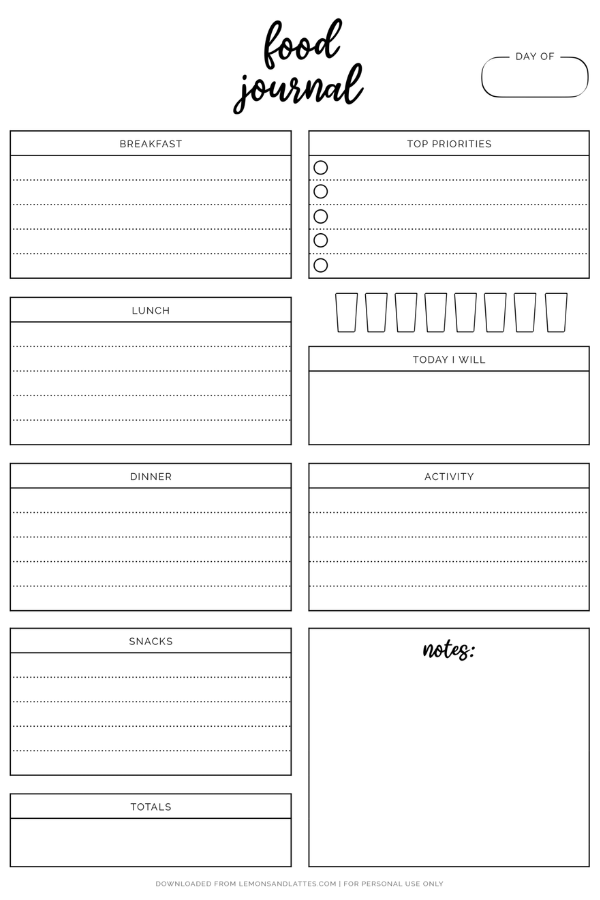
Ultimately, a printable food journal offers a reliable, flexible tool for anyone aiming to understand eating patterns without heavy digital tracking. Start with a single template, adapt as needed, and expand to a small library of pages that suit different situations. With consistent use, the journal becomes a quiet coach that invites reflection and steadier habits rather than a source of pressure. Its non-digital nature can ease concerns about screen time and data privacy, making it accessible in classrooms, clinics, and households.